

Short Term Rental Regulations Vancouver – 2026 Impact

Hosting discerning travelers in Vancouver comes with its own set of expectations and challenges. Luxury vacation rental owners know that short-term rentals are defined as stays under 90 consecutive days in a principal residence. With strict regulations designed to preserve long-term housing and enforce safety, understanding the rules around property eligibility, licensing, and compliance becomes crucial for maintaining both exclusivity and legal standing. This guide provides clarity on how owners can secure regulatory approval and optimize their management approach for upscale guests while staying fully compliant.
Table of Contents
Key Takeaways
Point | Details |
Short-Term Rental Definition | In Vancouver, short-term rentals are defined as accommodations rented for fewer than 90 consecutive days, subject to specific regulations. |
Principal Residence Requirement | Hosts must ensure that the property is their primary residence, and must obtain necessary approvals and documentation. |
Licensing and Safety Compliance | All short-term rentals must be registered with a provincial number and business license, and must comply with safety standards to avoid penalties. |
Financial Obligations | Hosts are responsible for various costs including registration fees, safety improvements, and applicable taxes, necessitating thorough financial planning. |
What Defines Short Term Rentals in Vancouver
In Vancouver’s dynamic real estate landscape, short-term rentals represent a specific category of temporary accommodation with precise legal definitions. Vancouver’s official regulations establish clear parameters for what constitutes a short-term rental, focusing on duration, property type, and legal compliance.
According to provincial guidelines, short-term rentals are defined as residential accommodations rented for fewer than 90 consecutive days. This definition applies across different property types and ownership structures, including:
Principal residences
Secondary suites
Condominiums with strata approval
Homes owned by both permanent residents and non-resident property owners
To qualify as a legitimate short-term rental in Vancouver, hosts must meet several critical requirements. British Columbia’s short-term rental legislation mandates that properties must be registered, with hosts obtaining a valid provincial registration number and a City of Vancouver business license.
Key eligibility criteria for short-term rentals include:
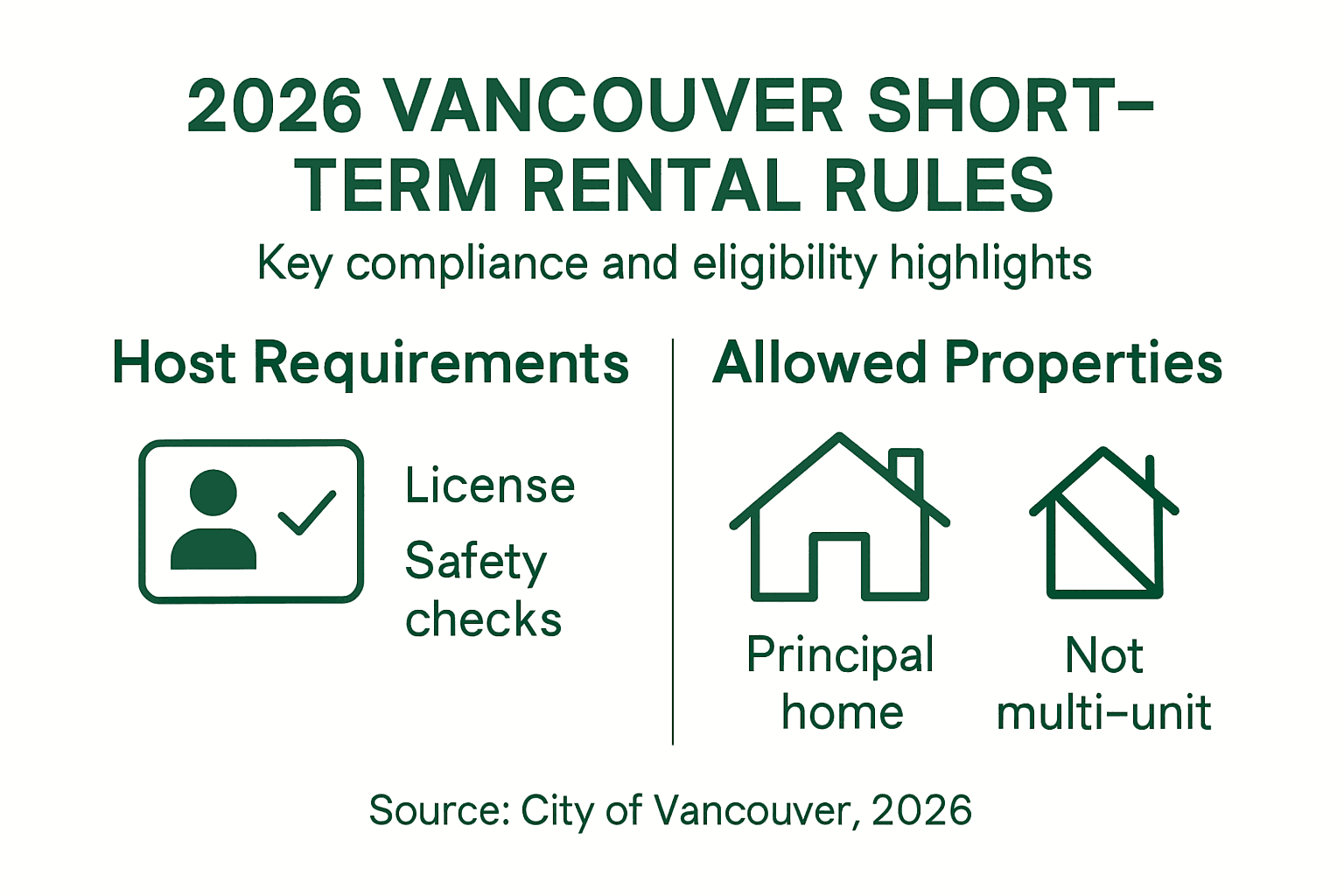
The property must be the host’s principal residence
Rentals are limited to 90 consecutive days per year
Hosts must have written permission from landlords (if renting)
Strata council approval is required for condominium rentals
Safety and building compliance standards must be met
Rental platforms like Airbnb and VRBO are also subject to these regulations, requiring hosts to display their provincial registration number in all listings. The goal is to balance housing availability with tourism opportunities while protecting long-term rental markets.
Pro tip: Always verify your specific strata or rental agreement requirements before listing a short-term rental, as individual building rules can significantly impact your ability to host.
Principal Residence Rule and Allowed Properties
The principal residence rule forms the cornerstone of Vancouver’s short-term rental regulations, creating a clear framework for property owners and renters interested in hosting temporary guests. Vancouver’s short-term rental guidelines establish strict parameters defining which properties can be legally used for short-term rentals.
Under these regulations, property owners can only rent out specific types of residential spaces:
Their primary dwelling where they live full-time
One secondary suite on the same property
Basement or laneway homes attached to their principal residence
Accessory dwelling units meeting specific city requirements
The goal of these restrictions is multifaceted. Provincial short-term rental legislation aims to preserve long-term housing stock by preventing investors from converting multiple properties into vacation rentals. This approach ensures that short-term rentals remain a supplementary income source for residents rather than a large-scale commercial enterprise.
Key considerations for property owners include:
Demonstrating the property as their primary residence
Obtaining necessary permissions from landlords or strata councils
Limiting rentals to 90 consecutive days per year
Maintaining primary occupancy of the property
Complying with local zoning and building regulations
Verification requirements are stringent, with hosts needing to provide documentation proving their principal residence status. This might include utility bills, tax records, or voter registration that confirms the property as their primary living space.

Pro tip: Consult a local real estate professional to verify your specific property’s eligibility for short-term rental before investing time and resources into preparation.
Licensing, Registration, and Safety Requirements
Short-term rental licensing in Vancouver represents a comprehensive system designed to ensure guest safety and regulatory compliance. Vancouver’s business licensing guidelines outline a detailed process for hosts seeking to legally operate their rental properties.
To legally operate a short-term rental, hosts must complete several critical registration steps:
Obtain a City of Vancouver short-term rental business license
Register with the provincial short-term rental registry
Acquire a unique provincial registration number
Display the registration number in all rental advertisements
Pay required annual registration fees
Provincial short-term rental legislation mandates stringent safety requirements that hosts must implement. These safety standards include:
Installing functional fire detectors
Mounting carbon monoxide detectors
Maintaining accessible fire extinguishers
Creating and posting a visible fire escape plan
Ensuring compliance with local building and occupancy codes
Compliance verification is rigorous, with local authorities actively monitoring and enforcing regulations. The City prioritizes education, offering resources to help hosts understand and meet all necessary requirements before potential penalties are imposed.
Hosts who fail to comply with licensing and safety regulations may face significant fines and potential suspension of their short-term rental privileges.
Pro tip: Schedule a pre-listing safety inspection to identify and resolve potential compliance issues before applying for your short-term rental license.
Obligations, Penalties, and Compliance Risks
Short-term rental compliance represents a complex landscape of legal responsibilities and potential consequences for Vancouver property owners. Vancouver’s short-term rental regulations establish clear obligations that hosts must meticulously follow to avoid significant financial and operational penalties.
The primary obligations for short-term rental hosts include:
Maintaining accurate registration and licensing
Adhering to principal residence requirements
Limiting rental duration to 90 consecutive days annually
Ensuring comprehensive property safety standards
Minimizing neighborhood disruption
Managing waste and noise responsibly
Provincial compliance enforcement introduces a robust system of potential penalties for non-compliance, which can include:
Substantial monetary fines ranging from $500 to $10,000
Immediate suspension of short-term rental business license
Removal from official rental platforms
Legal action and potential civil proceedings
Permanent prohibition from operating short-term rentals
Risk mitigation requires hosts to proactively understand and implement all regulatory requirements. The City’s Compliance and Enforcement Unit actively monitors short-term rental operations, with investigations potentially triggered by neighbor complaints, platform reporting, or routine municipal inspections.
Here’s a summary of the main compliance risks and recommended strategies for Vancouver short-term rental hosts:
Compliance Challenge | Risk Level | Recommended Action |
Licensing requirements | High | Obtain all required licenses |
Principal residence proof | Medium | Keep documentation updated |
Safety equipment standards | High | Schedule annual safety checks |
Rental duration limits | Medium | Use calendar to track rental days |
Neighbor complaints | Variable | Communicate hosting plans proactively |
Non-compliance is not merely a financial risk, but can result in permanent exclusion from the short-term rental market in Vancouver.
Pro tip: Maintain meticulous documentation of your compliance efforts and consider consulting a local real estate lawyer specializing in short-term rental regulations to ensure full adherence.
Costs, Taxes, and Financial Considerations
Financial planning for short-term rentals in Vancouver involves navigating a complex landscape of fees, taxes, and regulatory expenses. Vancouver’s short-term rental regulations outline specific financial obligations that hosts must carefully budget and prepare for.
Key financial costs and considerations include:
Provincial registration fees
City of Vancouver business licence expenses
Safety upgrade and compliance costs
Potential property tax implications
Required safety equipment investments
Professional consultation fees
Vancouver rental market insights suggest hosts should anticipate multiple tax responsibilities:
Transient accommodation tax
Provincial sales tax
Federal income tax on rental revenues
Municipal service charges
Potential additional local levies
Financial strategy requires hosts to develop a comprehensive understanding of recurring and one-time expenses associated with short-term rental operations. Unexpected costs can quickly erode potential rental income, making thorough financial planning essential for sustainable hosting.
Below is a quick reference to common financial obligations and their business impact as a Vancouver short-term rental host:
Cost or Tax Type | Frequency | Business Impact |
Provincial registration fee | Annual | Required for legal operation |
City business license | Annual | Enables advertising |
Safety equipment investments | Occasional | Protects guests and property |
Transient accommodation tax | Per booking | Reduces net rental income |
Professional consulting fees | As needed | Helps ensure compliance, maximize deductions |
Successful short-term rental hosts treat their property as a business, meticulously tracking all expenses and potential tax deductions.
Pro tip: Consult a tax professional specializing in short-term rental income to develop a precise financial strategy that maximizes deductions and ensures full regulatory compliance.
Simplify Compliance and Maximize Your Short-Term Rental Potential in Vancouver
Navigating Vancouver’s detailed short-term rental regulations can be overwhelming whether you are a property owner or an aspiring host. Key challenges such as meeting the principal residence rule, securing the proper licensing, and ensuring safety compliance require thorough understanding and ongoing management. With strict limits on rental duration and complex registration demands, many hosts find the journey daunting and risk costly penalties without expert support.
At Nestoria Estates, we specialize in transforming these challenges into opportunities by offering a comprehensive vacation rental management platform tailored to Vancouver’s legal landscape. Discover how Nestoria Estates helps property owners confidently comply with regulations while unlocking premium income through curated luxury experiences and expert property listing services. Whether you need assistance with registration, optimizing your rental calendar, or enhancing guest satisfaction with exclusive add-ons like private chefs and city tours, our platform ensures your short-term rental journey is seamless and rewarding.

Don’t let regulatory complexities hold back your rental success. Take control today by visiting Nestoria Estates and learn how our expert management solutions and personalized hosting packages make compliance stress-free while maximizing your property’s earning potential. Start your journey to effortless and profitable short-term rental hosting now.
Frequently Asked Questions
What is classified as a short-term rental in Vancouver?
Short-term rentals in Vancouver are defined as residential accommodations rented for fewer than 90 consecutive days. This includes principal residences, secondary suites, and approved condominiums.
What are the key requirements for hosting a short-term rental in Vancouver?
To host a short-term rental in Vancouver, property owners must have a valid registration number, a City business license, and the property must be their principal residence. Additionally, they can only rent for up to 90 days consecutively per year.
What safety requirements must be met for short-term rentals in Vancouver?
Hosts must install functional fire detectors, carbon monoxide detectors, maintain fire extinguishers, and post a visible fire escape plan. Compliance with local building and occupancy codes is also necessary.
What penalties can a host face for non-compliance with short-term rental regulations?
Hosts can face fines ranging from $500 to $10,000, suspension of their business license, removal from rental platforms, and potential legal actions if they do not comply with the regulations.
Recommended
Comments