

Short-Term vs Long-Term Rentals – Impact on Luxury Travel

Choosing where to stay can shape every moment of your luxury getaway, especially when romance calls for privacy, style, and seamless experiences. High-income couples across North America are turning to short-term rentals to enjoy personalized touches that standard hotels rarely offer. From curated private chef dinners to bespoke city tours, these exclusive properties deliver the flexibility and local flavor that modern travelers crave, setting the perfect stage for unforgettable romantic adventures.
Table of Contents
Key Takeaways
Point | Details |
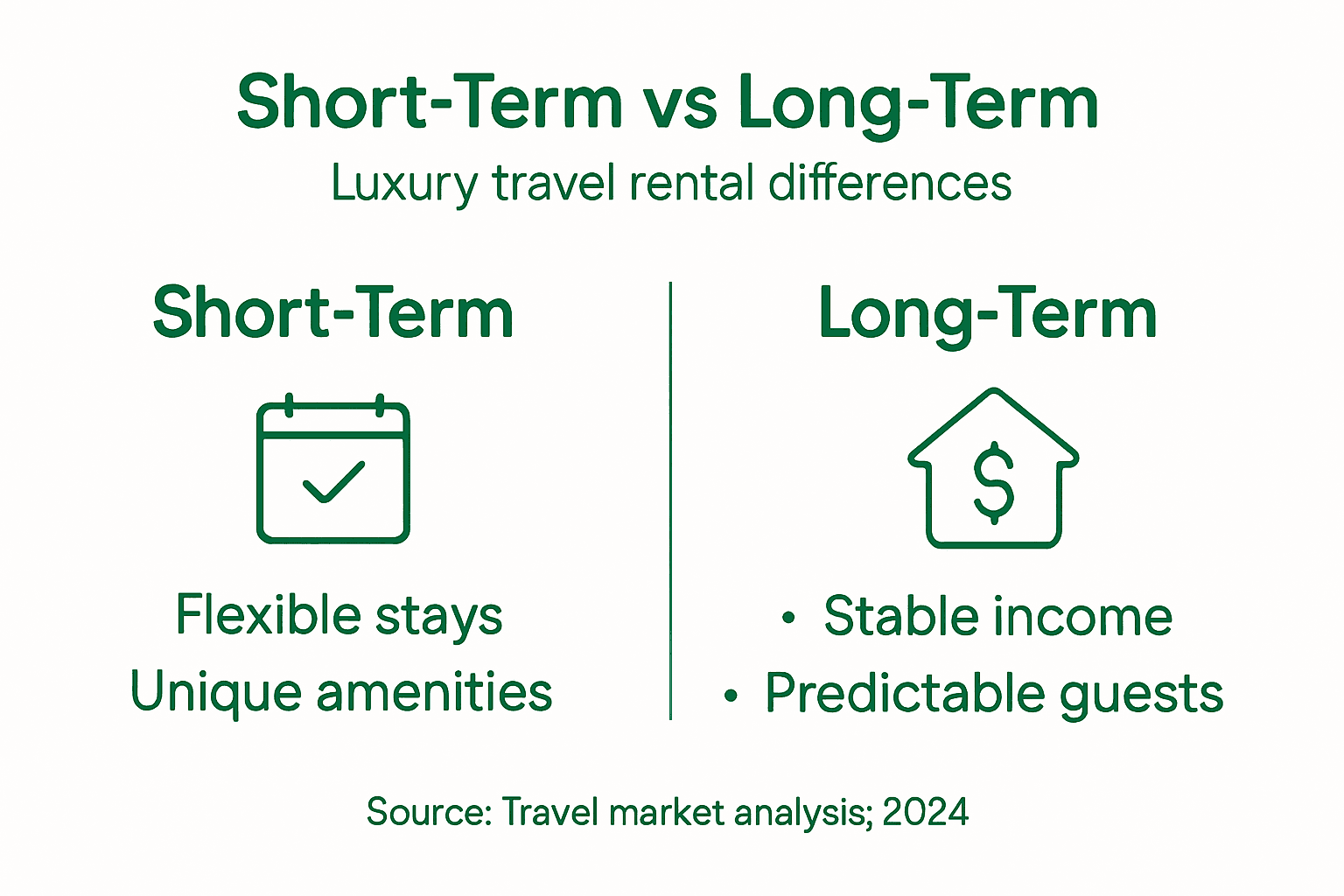
Short-Term vs Long-Term | Short-term rentals offer flexibility and personalized experiences for transient travelers, while long-term rentals focus on stability and routine living. |
Management Complexity | Successful short-term rental operations require sophisticated management strategies, rapid turnover, and continuous customer support. |
Regulatory Awareness | Property owners must stay informed about local regulations, licensing requirements, and community impacts to ensure compliance and mitigate risks. |
Financial Strategy | Implementing dynamic pricing and robust financial tracking can enhance profitability in the volatile short-term rental market. |
Defining Short-Term and Long-Term Rentals
Luxury travel accommodations have evolved dramatically with the rise of innovative rental options. Short-term rentals represent a dynamic alternative to traditional lodging, offering travelers unique and personalized experiences. Short-term rental definitions characterize these accommodations as furnished properties rented for brief periods, typically less than a month, through digital platforms.
These rentals differ fundamentally from long-term arrangements in both duration and purpose. While long-term rentals involve extended leases spanning months or years and focus on stable residential living, short-term rentals cater to transient travelers seeking immersive, localized experiences. The key distinctions include:
Duration: Short-term rentals range from a few nights to several weeks
Purpose: Vacation, business travel, or temporary stays
Flexibility: Easy booking, quick turnover, diverse property types
Experience: Personalized, local-living atmosphere
Interestingly, the European regulatory landscape759356_EN.pdf) reveals significant variations in how short-term rentals are managed across different regions. Some cities implement strict regulations to balance housing availability and tourism demands, highlighting the complex ecosystem surrounding these rental models.
Here’s a structured comparison of short-term and long-term rental models for luxury travelers:
Aspect | Short-Term Rentals | Long-Term Rentals |
Booking Process | Instant online reservations | Formal lease agreements |
Guest Experience | Immersive, local engagement | Stable, routine living |
Property Variety | Unique homes, apartments | Standard residences |
Typical Traveler | Vacationers, business guests | Residents, relocating workers |
Pro tip: When booking a short-term rental, always verify local regulations and property-specific guidelines to ensure a smooth, compliant travel experience.
Comparing Rental Durations and Experiences
Luxury travelers today have unprecedented choices between short-term and long-term rental experiences, each offering distinct advantages tailored to different travel preferences. Serviced apartments and rental markets have dramatically transformed how discerning travelers approach accommodation, providing unprecedented flexibility and personalization.
The key differences between short-term and long-term rentals emerge through several critical dimensions:
Duration: Short-term rentals span days to weeks; long-term rentals extend to months or years
Purpose: Short-term rentals support tourism and temporary visits; long-term rentals provide stable residential arrangements
Flexibility: Short-term options offer rapid booking and quick transitions
Cost Structure: Typically higher nightly rates for short-term rentals versus predictable monthly payments for long-term leases
Amenities: Short-term rentals often include more comprehensive, hotel-like services
The impact of digital platforms.pdf) has revolutionized how travelers perceive and select accommodations. Modern short-term rentals now offer immersive experiences that go beyond traditional lodging, allowing guests to live like locals while enjoying premium amenities and personalized services.
Travel patterns have also evolved, with increasing demand for adaptable accommodations that support diverse lifestyle needs. Business travelers, digital nomads, and luxury tourists now seek rentals that provide not just a place to stay, but a complete living experience that reflects their personal style and travel objectives.
Pro tip: When selecting between short-term and long-term rentals, carefully evaluate your specific travel duration, budget constraints, and desired level of local immersion to make the most informed decision.
Management, Maintenance, and Guest Services
Luxury short-term rentals demand an extraordinarily sophisticated approach to property management that goes far beyond traditional long-term residential leasing. Short-term rental management challenges represent a complex operational ecosystem requiring continuous attention, professional expertise, and dynamic service delivery.
The critical components of exceptional short-term rental management include:
Rapid Guest Turnover: Cleaning and preparation between guests within hours
Advanced Communication Systems: Instant messaging, automated check-in instructions
24/7 Customer Support: Immediate response to guest inquiries and potential issues
Professional Housekeeping: Rigorous cleaning and maintenance standards
Technology Integration: Smart home systems, digital key access, real-time monitoring
Data-driven management strategies have transformed how luxury rental properties are maintained and serviced. Modern management approaches leverage technology to create seamless, personalized experiences that differentiate high-end short-term rentals from traditional accommodations.

Unlike long-term rentals with stable, predictable occupancy, short-term rental management requires exceptional flexibility and responsiveness. Professional management teams must anticipate guest needs, maintain impeccable property conditions, and create memorable experiences that encourage positive reviews and repeat bookings.
Pro tip: Invest in robust property management software that integrates communication, booking, maintenance, and guest feedback systems to streamline your short-term rental operations.
Legal Frameworks and Regulatory Differences
The legal landscape surrounding short-term rentals represents a complex and evolving regulatory environment that dramatically differs from traditional long-term housing arrangements. Regulatory approaches across Europe759356_EN.pdf) demonstrate significant variations in how different jurisdictions manage and control short-term rental activities.
Key regulatory considerations for short-term rentals include:
Licensing Requirements: Local permits and registration processes
Occupancy Restrictions: Night caps and maximum rental duration limits
Tax Obligations: Specific reporting and taxation frameworks
Zoning Regulations: Restrictions on residential versus commercial use
Community Impact Assessments: Evaluating neighborhood disruption potential
Short-term rental legal frameworks increasingly emphasize proportional regulation that balances property owner rights with community interests. Policymakers are moving away from blanket prohibitions toward nuanced, data-driven approaches that recognize the economic and social value of flexible accommodation options.
Unlike long-term rental regulations that primarily protect tenant rights, short-term rental legal frameworks must address a broader range of concerns including housing affordability, neighborhood character, and tourism management. This multifaceted approach requires property owners and managers to navigate increasingly sophisticated regulatory landscapes.
Pro tip: Consult local municipal authorities and legal professionals specializing in short-term rental regulations to ensure full compliance and understanding of specific jurisdictional requirements.
Financial Implications for Owners and Travelers
Economic impact of short-term rentals reveals a transformative landscape for property owners and travelers alike, with significant financial opportunities and complex market dynamics. The traditional rental model is being reimagined through flexible, revenue-generating strategies that offer unprecedented economic potential.
Key financial considerations for short-term rental stakeholders include:
Owner Potential: Higher income through dynamic pricing
Traveler Benefits: More affordable and authentic stay experiences
Operational Costs: Increased maintenance and management expenses
Tax Implications: Complex reporting and revenue tracking
Market Volatility: Seasonal pricing fluctuations
Rental market financial dynamics demonstrate that short-term rentals can significantly impact local housing economies. Property owners may experience higher potential returns compared to traditional long-term leasing, but must carefully navigate operational complexities and regulatory requirements.
The financial ecosystem of short-term rentals extends beyond simple income generation, creating ripple effects in local economies through job creation, tourism support, and innovative hospitality models. Travelers benefit from more personalized, cost-effective accommodation options that provide deeper cultural immersion and flexibility.
Pro tip: Develop a comprehensive financial strategy that includes dynamic pricing models, robust expense tracking, and contingency funds to maximize short-term rental profitability.
The following table summarizes major regulatory and financial challenges facing short-term rental owners:
Challenge | Impact on Owners | Mitigation Strategy |
Licensing complexity | Risk of fines or shutdown | Seek expert legal advice |
Seasonal price volatility | Unpredictable income | Use dynamic pricing tools |
Increased maintenance | Higher ongoing costs | Schedule regular servicing |
Tax compliance | Potential audits & penalties | Employ specialist accountants |
Risks, Responsibilities, and Common Pitfalls
Short-term rental risks represent a complex landscape of potential challenges that demand meticulous management and strategic planning. Property owners must navigate a nuanced terrain of operational, legal, and financial considerations that extend far beyond traditional rental models.
Key risks and responsibilities for short-term rental owners include:
Regulatory Compliance: Staying current with local and national rental laws
Insurance Requirements: Comprehensive coverage for property and liability protection
Guest Screening: Implementing rigorous vetting processes
Property Maintenance: Consistent upkeep and rapid repair management
Financial Volatility: Managing income fluctuations and unexpected expenses
Regulatory enforcement challenges highlight the critical need for proactive risk management. Common pitfalls often emerge from inadequate preparation, including insufficient insurance coverage, lack of clear guest communication protocols, and failure to understand local regulatory nuances.
Beyond financial risks, owners must consider potential community impacts, neighbor relations, and the broader implications of their short-term rental activities. Successful management requires a holistic approach that balances personal financial goals with responsible property stewardship and community consideration.
Pro tip: Develop a comprehensive risk management strategy that includes detailed documentation, robust insurance coverage, and a contingency fund to mitigate potential financial and operational challenges.
Experience the Best of Short-Term Luxury Rentals with Nestoria Estates
Navigating the complex world of short-term versus long-term rentals can be a challenge for both property owners and travelers seeking memorable luxury experiences. This article highlights crucial points like the need for flexible booking, personalized guest services, and understanding regulatory and financial nuances. If you are looking to maximize your property’s potential while delivering immersive, high-end stays that match your guests’ desires for authentic local engagement and premium comfort, Nestoria Estates is your ideal partner.
Our platform specializes in expertly managing short-term luxury rentals with tailored solutions including exclusive packages such as private chefs, romantic getaways, and curated city tours. By combining state-of-the-art property management with personalized experiences, we help property owners overcome challenges like rapid guest turnover and regulatory compliance while offering travelers unique stays that go beyond conventional lodging.
Elevate your rental strategy or find your perfect luxury vacation home today at Nestoria Estates.

Discover how tailored short-term rental management and exclusive travel experiences can transform your next stay or property investment. Visit Nestoria Estates now to unlock a world where exquisite properties meet unforgettable moments. Let us guide you through seamless bookings and elevated hospitality that truly sets you apart.
Frequently Asked Questions
What are short-term rentals?
Short-term rentals are furnished properties rented for brief periods, typically less than a month, primarily through digital platforms. They cater to transient travelers seeking unique, localized experiences.
How do short-term rentals differ from long-term rentals?
Short-term rentals usually span from a few nights to several weeks and focus on vacation or business travel, while long-term rentals involve extended leases of months or years aimed at stable residential living.
What are the advantages of short-term rentals for luxury travelers?
Short-term rentals offer flexibility, easy booking processes, and unique accommodations that provide immersive local experiences compared to traditional hotels or long-term stays.
What are key considerations for managing short-term rentals?
Effective management of short-term rentals involves rapid guest turnover, advanced communication systems, 24/7 customer support, and professional housekeeping to enhance guest experiences and maintain property standards.
Recommended
Comments