

Vacation Rental Preparation Steps for Vancouver Hosts

TL;DR:
Thorough cleaning, safety checks, stock management, and detailed checklists are essential to improve vacation rental ratings and revenue. Proper systems like smart locks, linen sets, and documented workflows ensure consistent and efficient turnovers, especially in competitive markets like Vancouver. Investing in these preparations upfront helps hosts avoid guest complaints, negative reviews, and operational failures.
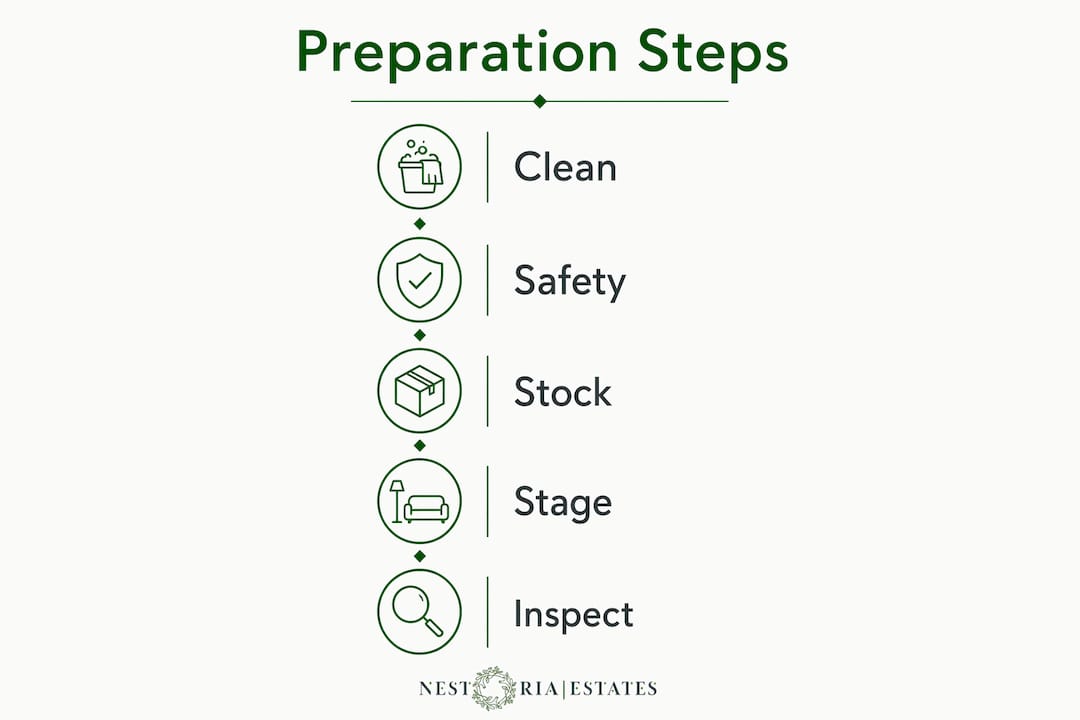
Vacation rental preparation steps are the core actions property owners take to make a rental guest-ready, safe, and profitable before every stay. Properties that follow a thorough preparation checklist earn 20%–35% more revenue than those that skip these steps. For Vancouver Airbnb owners, where competition is high and guest expectations are rising, getting this process right is not optional. This guide covers cleaning, safety, stocking, turnover systems, and common mistakes, built around 2026 industry standards and local market realities.
What essential cleaning and safety tasks prepare a vacation rental effectively?
Cleanliness is the single most-reviewed attribute on booking platforms, ranking above location and amenities. That fact alone tells you where to focus first. A property that looks clean but smells stale or has a grimy bathroom will collect one-star reviews no matter how good the view is.

Turnover cleaning vs. deep cleaning
Turnover cleaning and deep cleaning are two different tasks with different time demands. Standard turnover cleaning takes 45–210 minutes depending on property size. Deep cleaning, done monthly or seasonally, requires 3–8 hours. Treating every turnover like a deep clean burns time and money. Treating every deep clean like a turnover leaves hidden grime that accumulates over weeks.
Turnover cleaning covers the visible and high-touch surfaces: counters, toilets, sinks, mirrors, door handles, light switches, and remote controls. Deep cleaning adds baseboards, inside appliances, window tracks, grout lines, and behind furniture. Both are necessary. Neither replaces the other.
Room-by-room cleaning priorities
The most effective approach to cleaning a vacation rental follows a room-by-room sequence:
Bathrooms: Scrub toilets, disinfect sinks and tubs, wipe mirrors, replace towels and toiletries, empty trash
Kitchen: Clean stovetop and oven exterior, wipe counters and cabinet fronts, check inside the microwave, restock dish soap and sponges
Bedrooms: Strip and replace all linens, check under the bed, wipe nightstands, confirm closet space is clear
Living areas: Vacuum and spot-clean upholstery, wipe remotes and electronics, straighten décor
Outdoor spaces: Sweep patios, check furniture for damage, remove any debris
Pro Tip: Disinfectants require dwell time to work. Let disinfectants sit on high-touch surfaces for the full recommended contact time before wiping. Spraying and immediately wiping is not disinfection.
Safety checks that protect guests and your rating
Safety checks belong on every vacation rental preparation checklist. Test smoke detectors and carbon monoxide alarms at every turnover. Check fire extinguisher pressure monthly. Confirm all door locks, window latches, and deadbolts function correctly. A single safety failure can end your listing permanently.
For properties with three or more bedrooms, a 24-hour booking gap between checkout and the next check-in gives your team enough time to clean, restock, and inspect without cutting corners.
How to stock and stage a vacation rental for guest comfort
A well-stocked rental reduces guest complaints before they happen. Guests should not need to search for a spare roll of toilet paper or wonder how to use the coffee maker. The setup you create before they arrive determines whether they contact you during their stay or simply enjoy it.
Standard amenities guests expect
Every guest-ready rental needs the following on arrival:
Fresh linens and towels for every bed and bathroom
Toiletries: shampoo, conditioner, body wash, hand soap, and at least two rolls of toilet paper per bathroom
Kitchen basics: dish soap, sponge, paper towels, trash bags, coffee, and tea
Cleaning supplies for guest use: a mop or broom, surface spray, and extra trash bags
Clear instructions for appliances, Wi-Fi, parking, and checkout
The linen swap system
The linen swap system is the most practical solution for fast turnovers. Owning three linen sets per property eliminates waiting for laundry to finish before the next guest arrives. One set is on the bed, one is in the wash, and one is staged and ready. The upfront cost runs $400–$900 depending on bedroom count, but it pays back quickly in time saved and negative reviews avoided.
Staging goes beyond clean linens. Label the Wi-Fi password on a card near the router. Leave appliance instructions in a binder or on a laminated card. Put the house manual somewhere guests will actually see it, like on the kitchen counter, not buried in a drawer. A vacation home setup guide built around your specific property removes the guesswork for both guests and cleaners.
Pro Tip: Pre-pack a cleaning caddy with all turnover supplies before each checkout. Label it with the property address if you manage multiple units. Your cleaner walks in, grabs the caddy, and starts immediately without hunting for supplies.
Smart lock integration
Smart locks save 15–25 minutes per turnover by eliminating manual key handoffs. You generate a unique access code for each guest and a separate code for your cleaning team. No key pickup, no lockbox fumbling, no waiting. For Vancouver hosts managing properties remotely, this single upgrade pays for itself within a few turnovers.
What systems make same-day guest turnovers work reliably?
Same-day turnovers are the hardest part of short-term rental management. A guest checks out at 11:00 AM and a new guest arrives at 3:00 PM. That four-hour window has to cover cleaning, restocking, inspection, and staging. Without systems, it falls apart.
The four foundational turnover systems
Professional hosts rely on four systems to handle same-day turnovers without failure:
Smart lock entry: Automates access for cleaners and guests, removes scheduling dependencies
Stocked supply closet: All consumables are pre-loaded and ready; no mid-turnover supply runs
Inventory linen swap: Three sets per bed, always one ready to go
Documented checklist with staging photos: Detailed checklists and staging photos give every cleaner a clear standard to match, regardless of experience level
Priority order when time is tight
When a turnover window is under two hours, clean in this order: bathrooms first, then kitchen, then bedrooms, then living areas. Bathrooms and kitchens generate the most guest complaints. If time runs short, a slightly unpolished living room is far less damaging than a dirty toilet.
Pro Tip: Send checkout reminders automatically the evening before departure. Confirm cleaner availability the same morning. Send guest arrival instructions two hours before check-in. This three-message sequence prevents most turnover bottlenecks.
The communication flow for a smooth turnover looks like this:
Evening before checkout: Automated reminder to guests with checkout instructions
Morning of turnover: Cleaner confirmation and property access code sent
Two hours before check-in: Guest welcome message with door code, parking, and Wi-Fi
Turnover cleaning consistency is what separates hosts who scale from hosts who burn out. A system that works once is useful. A system that works every time is a business.
What mistakes hurt vacation rental preparation most?
Most preparation failures come from shortcuts taken under time pressure. Recognizing the patterns helps you avoid them before they show up in your reviews.
Common mistakes that damage guest experience and ratings:
Rushing the bathroom: Guests notice soap scum, hair, and odors immediately. Bathrooms cut short in a tight turnover are the leading cause of cleanliness complaints.
Skipping deep cleaning cycles: Turnover cleaning does not catch grout buildup, dusty vents, or stained mattress covers. Without a monthly deep clean, these accumulate visibly.
Missing inventory restocks: Running out of toilet paper, coffee, or trash bags mid-stay generates a support call and a negative review. Set reorder triggers when supplies hit 20% of par level.
Vague guest instructions: A guest who cannot figure out the thermostat or the TV will message you at 10:00 PM. Clear, printed instructions prevent this entirely.
Ignoring the booking gap: Skipping the 24-hour gap on larger properties to capture an extra booking night often results in a rushed clean and a bad review that costs far more in future bookings.
Establishing detailed, property-specific checklists and staging photos ensures consistent quality across cleaning crews and turnovers. Without documentation, quality depends entirely on who shows up that day, and that is not a system. That is luck.
Photo documentation is the most underused quality control tool in short-term rental management. After each turnover, your cleaner takes a photo of every staged room. You review remotely. If something is off, you catch it before the guest does. This single practice raises cleaning standards across every crew member over time.
Key Takeaways
Thorough vacation rental preparation, built on cleaning systems, safety checks, stocked supplies, and documented turnover workflows, is the single most reliable path to higher ratings and increased revenue.
Point | Details |
Preparation drives revenue | Properties with thorough prep checklists earn 20%–35% more than those without. |
Cleanliness ranks first | Cleanliness is the top guest review factor, above location and amenities. |
Linen swap prevents delays | Three linen sets per property keeps same-day turnovers running without laundry waits. |
Smart locks save time | Automated access codes eliminate key handoffs and save 15–25 minutes per turnover. |
Documentation ensures consistency | Staging photos and checklists hold every cleaning crew to the same standard. |
What I’ve learned from watching Vancouver hosts get this wrong
The most common mistake I see Vancouver Airbnb owners make is treating their rental like a spare room instead of a commercial hospitality product. A hotel does not hope the cleaning crew figures it out. It has a protocol, a checklist, and a quality check. Your rental needs the same structure.
Hosts who invest upfront in three linen sets, a stocked supply closet, and a smart lock system almost always outperform those who manage each turnover reactively. The upfront cost feels significant. The time and review damage from skipping it costs far more. I have seen properties lose Superhost status over a single bad month caused entirely by turnover failures that a $600 linen investment would have prevented.
For Vancouver specifically, the market is competitive enough that operational discipline is not a differentiator. It is the baseline. Guests in this city have options. A property that consistently delivers a clean, well-stocked, easy-to-navigate experience holds its occupancy rate through slower seasons. A property that delivers inconsistently loses bookings to the next listing in the search results.
My recommendation for any Vancouver host managing more than one property: build your systems before you need them. Document your checklist, stage your supply closet, and set your reorder triggers now. The hosts who do this work before peak season are the ones who actually enjoy peak season.
— Kamran
How Nestoriaestates helps Vancouver owners stay guest-ready year-round
Running a guest-ready property on every single turnover is a full-time job. Nestoriaestates handles the operational side so Vancouver property owners do not have to.

Nestoriaestates provides professional cleaning teams trained on both turnover and deep cleaning standards, full supply stocking and restocking coordination, and guest communication management from booking confirmation through checkout. Every property is managed with documented checklists and quality checks built into each turnover cycle. Whether you own one unit or several across Vancouver, the full-service management options at Nestoriaestates are built to protect your ratings and grow your revenue without requiring your daily attention. Contact Nestoriaestates to get a free revenue projection for your property.
FAQ
What are the most important vacation rental preparation steps?
The most critical steps are thorough cleaning, safety checks, supply stocking, and staging with clear guest instructions. Properties that follow a documented preparation checklist consistently earn higher ratings and more revenue.
How long does turnover cleaning take for a vacation rental?
Standard turnover cleaning takes 45–210 minutes depending on property size. Deep cleaning, done monthly or seasonally, requires 3–8 hours and covers areas turnover cleaning does not reach.
Should I use a booking gap between guests?
A 24-hour booking gap is recommended for properties with three or more bedrooms. This gives your cleaning team enough time to clean, restock, and inspect without rushing.
How many linen sets does a vacation rental need?
Three linen sets per property is the standard for efficient turnovers. One set stays on the bed, one goes through the wash, and one is staged and ready for the next guest.
What is the best cleaning order for a same-day turnover?
Clean bathrooms first, then the kitchen, then bedrooms, then living areas. This order prioritizes the rooms that generate the most guest complaints when left unfinished.
Recommended
Comments